Human Composting

Any time there’s a death, a fundamental logistics question has to be answered. What to do with the body?
A few years ago, I saw an ad about human composting. Become a tree! Live on! the ad promised. It stuck with me. I don’t believe in God or the afterlife. I wouldn’t argue with you if you do; I’m not a hard-core atheist. I consider myself as more of an agnostic. I just don’t know. Religion doesn’t make sense to me, but the circle of life does. Our energy, our essence, it has to go somewhere, right? The law of conservation of energy states that energy cannot be created or destroyed, only transformed from one form to another. Maybe a part of us does go on to some sort of afterlife.
In 1907, there was a seriously flawed experiment done by a physician from Massachusetts, who tried to prove that the body lost weight at the time of death due to the soul departing the body. Of the six patients that this physician was able to measure, one of them supposedly lost 21 grams at the time of death, leading to a theory that the human soul weighs 21 grams. One must ignore the tiny sample size, the other 5 patients who didn’t lose weight, the methods used, and the fact that this hasn’t been repeated. Ever. But like many things, it was a message that resonated with some people and false news spread.
Regardless of whether a measurable soul leaves the body though, there is still a lot of energy to convert. And the common methods of disposal leave a lot to be desired.
Why does the standard burial process involve casketed burial with embalming? Why do we feel the need to preserve the body forever, and take up a plot of land that should be used for parks, houses, gardening, or really anything else? Is it some people’s way of trying to live on forever? It’s expensive. And it’s awful for the environment (using embalming chemicals and taking up the space required). And the embalming chemicals are dangerous for the funeral home workers who handle them. The only ‘pro’ to this process or choice that I’ve ever understood is having a place to ‘visit’ your loved one.
Well what about cremation, you ask? Well, it’s cheaper. Some people don’t like not having a place to visit. And urns are kind of, well, creepy. But cremation is also terrible for the environment. The National Geographic writes “Cremation requires a lot of fuel, and it results in millions of tons of carbon dioxide emissions per year.” “The average US Cremation”, “ takes up about the same amount of energy and has the same emissions as about two tanks of gas in an average car.” Not all that bad, but also not nothing. And definitely not giving back to the earth in the circle of life.
So what other options are there? They’re not as well known, but there are green options emerging. Green Burials are pretty new. For people who want the specific place to ‘visit’ their loved ones, you can choose to have your loved one buried in a biodegradable casket, with no embalming. The process allows the body to naturally decompose and the nutrients or energy in the body to be returned to the earth. Natural burials can be done in natural areas or hybrid cemeteries, so taking up space but in a more eco-friendly way. And with no chemicals.
Flameless Cremation or water cremation is another option, using water to breakdown the body instead of flame. Instead of ashes, what’s left are bones and liquid. The liquid is released with other wastewater (a nice way of saying it’s flushed down the toilet). According to Mueller Memorial, that water is free of DNA and tissues and is sterile, and is a ‘valuable contribution to water systems.’ The bones are then milled into a powder and returned to the family - similar to ashes.
And then there’s composting. Its, well, exactly what it sounds like. Just like many cities compost food scraps, you can compost a human body. We are, after all, organic. Some of us more than others depending on what you eat, but I digress. Some companies will bury your ‘vessel’ with a tree seed above, to ‘turn you into’ a tree. The company that we used (there are limited choices depending on where you live) is based in Washington state. They will send some or all of the soil back to you once the process is complete.
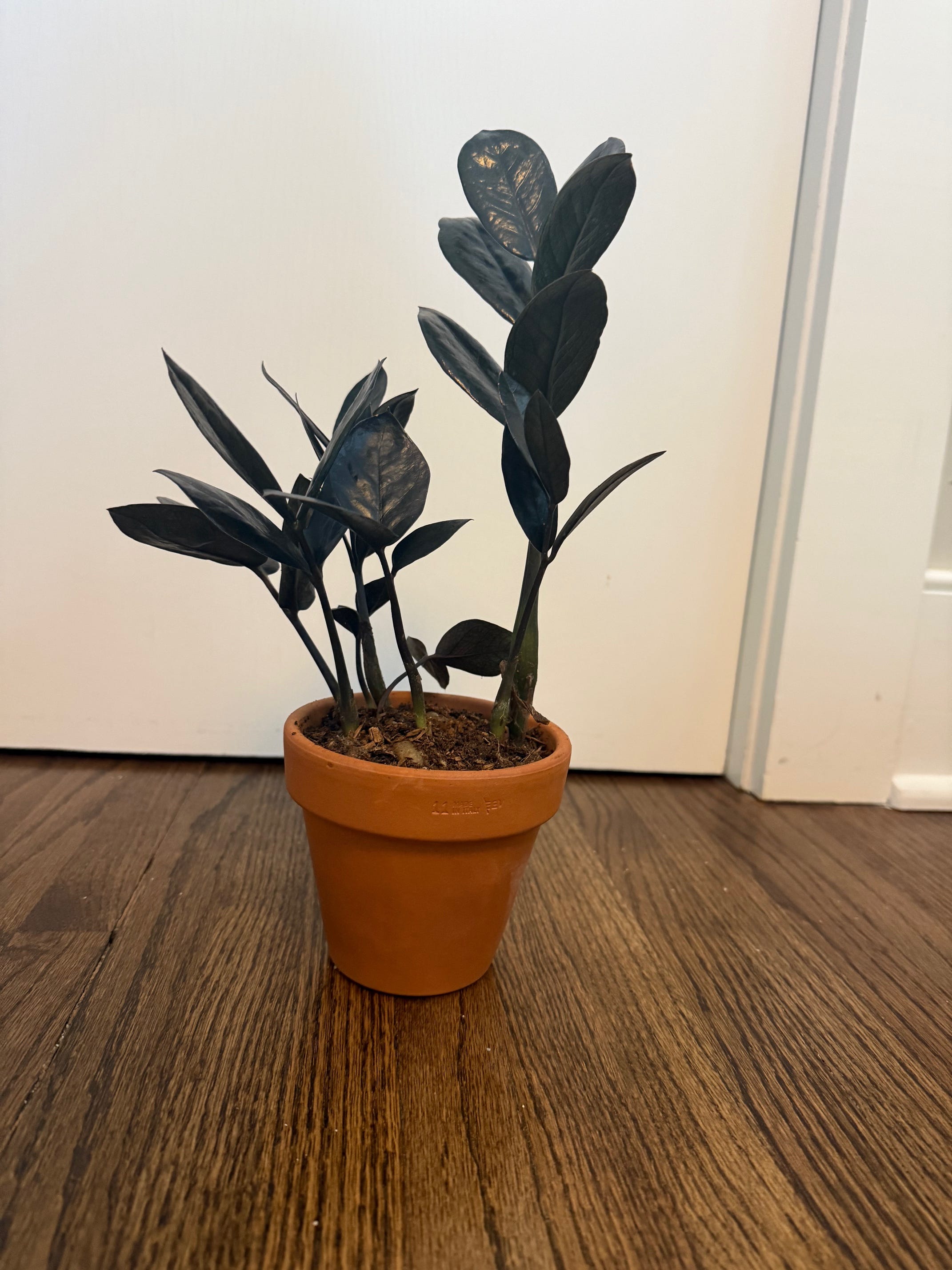
I was sure. I wanted to compost Declan. It’s what I want for myself too. But in addition to minimizing his carbon footprint, I wanted to be able to plant a resilient plant of some sort in his dirt, and keep a piece of him, or his energy, alive and with us. I wanted him to become part of the earth again and re-enter the circle of life. Instead of being trapped forever as a preserved corpse.
While I can make the argument for this choice, and I wouldn’t change it if I could, going through this process has made me understand more why people choose traditional burials with embalming. Once Declan was received in Washington state and the composting process started, I kept having these horrible visions of him being eaten by worms, and his body partially rotted like you’d see in a compost bin. These intrusive thoughts make me sick. Even writing about it now makes me nauseous. And part of me wishes he, in any form, still existed somewhere. Logically I know that even if his body were embalmed, he would still be gone, but the human psyche isn’t always rational or logical.
I got an email from the funeral home recently that his soil has been received back from Washington - the amount we requested anyways. His process made about 250 pounds of dirt because of all of the things that had to be put in with him in order to turn him into dirt. We only asked for some of that back - the rest is being spread in a nature preserve in Washington.
“Let us know when you feel ready to come pick it up.” They said.
Um. Never? It feels like one more nail in the coffin (pun... intended?) to really solidify that he is, in fact, gone. When I bring him home as dirt, that’s it. He’s not Declan anymore. I don’t know that I’ll ever be fully ready. But that’s life.... and death. And while having my Declan plant will be emotionally challenging for me up front, I think that it will be a nice ‘place’ for me to ‘visit’, to talk to him and to tell him that I love him.